The Dolly Parton song that’s meant the most to me
“Hard Candy Christmas” isn’t a Christmas song at all.
It’s about the kind of disappointment that sharpens the pain of routine hardship.
It’s also about being resilient in the face of cruel and self-serving hypocrites.
Lord, it’s like a hard candy Christmas
I’m barely gettin’ through tomorrow
But still I won’t let
Sorrow bring me way down
Dolly’s version of it, her sweet voice exuding kindness and hope in the face of maddening unfairness, has resonated deeply with me recently.
It reached me in the distant aftermath of a real doozy of a personal disaster, when I had just begun to convince myself that I might be fine. A little knocked around, but able to look forward with some tempered optimism.
I’d barely noticed the song come over the car’s speakers one afternoon this spring as I drove back to northern Vermont after a visit to Cape Cod. It was an addendum to my favorite country music playlist; Apple Music’s “suggestion” after four hours of Patsy Cline, Gram Parsons, The Little Willies, and a bunch of songs off Jimmy Buffett’s A1A and Living and Dying in 3/4 Time.
I’d been aware of “Hard Candy Christmas,” of course. I’d seen Dolly and the cast perform it in The Best Little Whorehouse in Texas, but I hadn’t listened to it in ages. When I noticed myself quietly crying halfway through the song, I knew it had arrived at just the right time to speak to my partially healed heart.
Had it shown up any sooner, I would have found the hopefulness irrelevant, even annoying.
Because in 2023, I experienced one of the worst, most baffling things that’s ever happened to me.
In the spring of that year, most of the residents of my small New England town—the ones who knew me, anyway— suddenly stopped speaking to me.
I found myself truly and properly ostracized, Nathaniel-Hawthorne style. Only I was so confused I didn’t know what letter I was supposed to wear on my chest.
I’d recently taken a new job with the town and, as best I can figure, my transgression was making a group of men super angry over a water permit.
That’s really it. There’s some municipal insider-baseball to the story, but I think I just made some people really mad and they decided I didn’t need to exist to them anymore.
And they were right.
At work, I’d managed the admin side of the town’s water and sewer systems and had been an enthusiastic and quick learner in my new job. I found the utility systems surprisingly fascinating, and I enjoyed my role as a liaison among everyone involved in running them.
Then about five months in, this group of men–-Ted, Glenn, and Win, along with Erik the fire chief and his lieutenant, David– wanted a municipal water connection for a public-private building project they were spearheading. It was a new volunteer fire station, larger and situated away from the flood-prone creek where the current station sat.
It was a good project, the Selectboard supported it, and it had no detractors as far as I could tell.
Then, for some reason, the men brought in their own civil engineer to advise them on the town’s water system, skirting the routine process of simply asking the town for a permit.
I think they were just impatient. Chasing COVID-era grant money and probably feeling some deadline pressure, working through the town probably seemed time-consuming and cumbersome.
But their collaboration with the engineer turned out to be a boondoggle.
The engineer gave them a lot of bad information. Then he laid out an expensive and Byzantine path forward that I can only imagine must have heightened their sense of the clock ticking on possible grant money.
That’s where I came in, trying to be helpful.
What I had to offer was accurate information. What I lacked was credibility with longtime residents. I was about to learn a hard lesson about which one mattered more in a small town.
Pop your head into my office at any random moment, and I could’ve told you exactly how much water was flowing through the system, how many gallons were in the well, and whether there was a leak or a malfunctioning pump.
Well, that last part isn’t totally true: the remote monitoring system sometimes went wonky in heavy weather, signaling that the pumps weren’t shutting off and the holding tanks were overflowing. I often had to trudge a mile or so uphill from my office to the pump house to see which piece of machinery was malfunctioning—the monitor or the pumps. It was almost always the monitor.
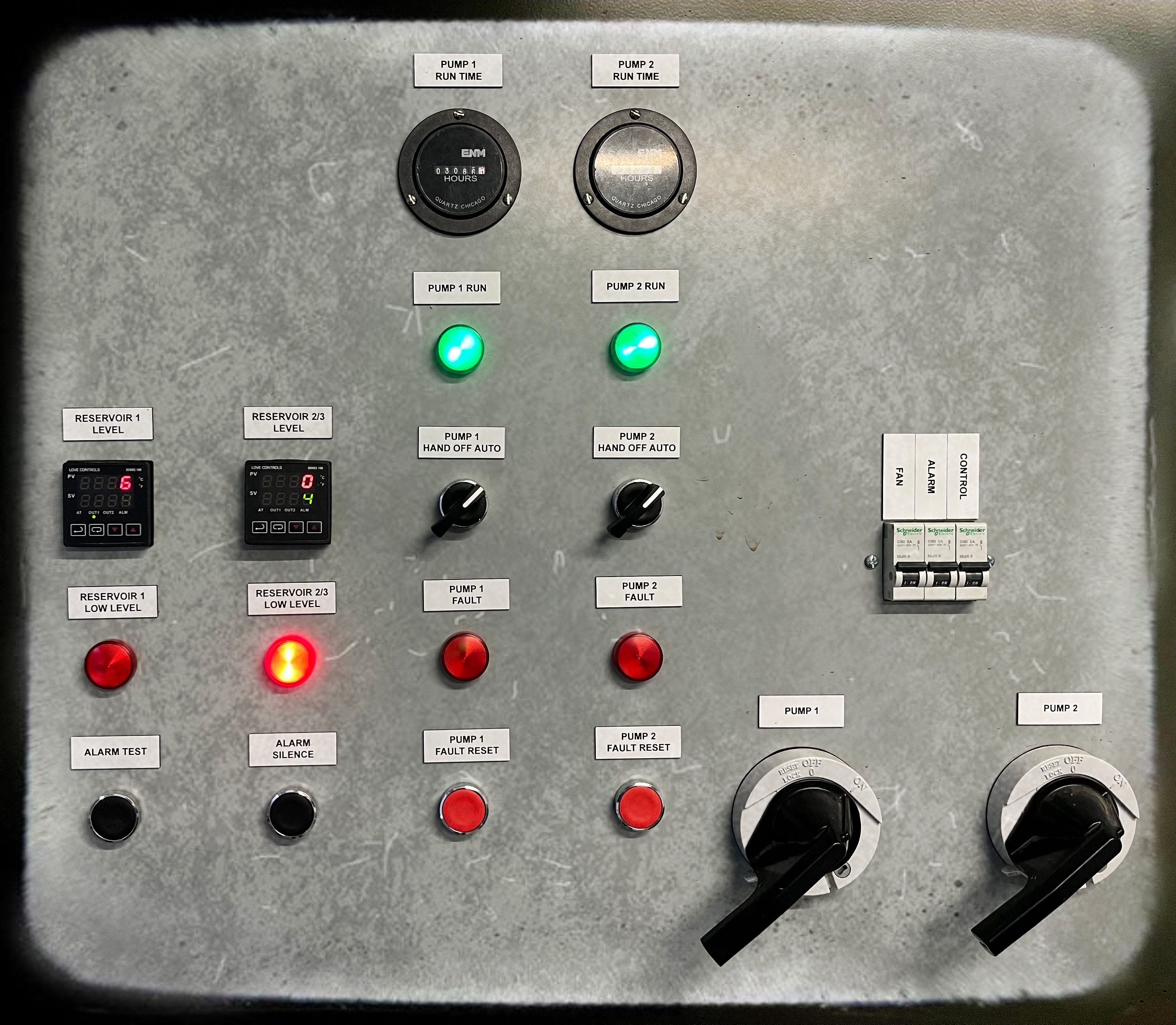
When one of the project leaders said they planned to go to the state regulators and ask for an overhaul of our allocation system (which the state does not govern) and another wanted to raise money for a new holding tank to expand the system’s capacity, I sensed some cart-before-horse exuberance. So I asked them to speak to the Selectboard, which asked them to tap the brakes and work with the town on their water permit.
This seemed to make the men absolutely furious. More fears of missing out on funding, I suppose.
Still, after two days and a few phone calls to verify numbers, I had good news: there was plenty of water capacity for even the most expansive version of their project. No need to go to the state or build more tanks. By day three, I had a permit request filled out and sitting on my desk, ready for the men to submit for certain approval by the Selectboard.
I knew the men were angry, but I was proud of how quickly I’d put the numbers together and naively confident that once everyone understood how simple the water issue really was, they would come around.
But by then, everyone had gone dead silent on me. Mike, the highway foreman, took to giving me a seething, rage-filled stare as he walked past my office door in the mornings.
I saw Ted in the general store one evening, and he looked at me with an expression of such palpable, withering disgust it took my breath away.
Rumors flew in neighboring town offices that I was going to be fired.
Nobody ever came to my office to get the permit.
The next thing I heard, a week later and secondhand, was that Chief Erik had canceled the project altogether. In doing so, he left a $200,000 grant from the town on the table and walked away from a roughly quarter-million-dollar FEMA hazard-mitigation grant that would have paid the market value of the old station along with all of the costs of its demolition.
Around town, I seemed to be fading from view.
Friends, neighbors, people whose weddings I’d attended, began averting their eyes when they saw me. Waiting in line at the general store or post office, they would hold their gazes at what I came to recognize as an “angle of avoidance.” About thirty degrees below horizontal, fixed on a single spot on the floor until I was safely out of their periphery.
Maybe I’ll get a car
Maybe I’ll drive so far
They’ll all lose track
Me, I’ll bounce right back
Dolly’s voice and words wouldn’t have been a balm to me then. Trapped in a bewildering maelstrom of hurt, anger, and shame, it was all I could do to summon the will to leave the house each day and try not to cry in public.
I didn’t think I’d bounce right back. I thought I was done; a finished product composed entirely of failure. Dolly’s wistful-but-hopeful notes were a language I wasn’t yet ready to comprehend.
I resigned my position with the town after the Selectboard refused my request for mediation. I knew I couldn’t be fired; I’d done my job exactly as I was supposed to. But unless I had employment-lawyer money to force a mediated conversation (I didn’t), I’d be going to work each day in an environment of Chernobyl-level toxicity.
Still, I stuck around town for two more painful years, thinking the facts would emerge once the anger dissipated and that maybe that would matter.
I don’t need to tell anyone in 2026 that the facts only matter if people are curious enough to seek them out and examine them in good faith.
Surely that was the power of shunning. Ted, Glenn, Win, and the fire department guys didn’t have a reasonable leg to stand on if the facts were all on the table. The truth would have made them look like bumbling small-town bullies. But they had the power to create a narrative that served their purposes and then lock it in place with silence.
Eventually I sold my little condo, took a job that came with a rustic cabin on a mountain, and began to reflect with some distance and occasional dispassion, and eventually to start to heal.
It was nearly three years out from the whole debacle when Dolly’s voice brought me back, not to the pain of the initial aftermath, but to the place I am now. I’m not always at peace, but it shows up now and then, staying longer each time.
I think of Dolly’s early career in country music and all of the disrespect and abuse she must have experienced. After everything she endured, she only became kinder, a more loving and lovely person.
Since this whole experience, I’ve been wary of friendships and even more skeptical about notions of “community.” (Who decides who does and doesn’t belong? Are community values static and rigid or can they change and evolve? Can they withstand scrutiny?)
It would be easy now to become even more closed off; to refuse and reject connection.
But listening to “Hard Candy Christmas” gives me hope, not just that I’ll go on in some tolerable shell of self-protection, but that I could, maybe, open my heart again to something larger than myself.