Leaving New Orleans
This is a short piece I wrote for a Moth StorySlam at the Bell House in Brooklyn in the fall of 2025.
One Friday afternoon early in the new school year, I was enjoying happy hour with some teacher friends at a place called the Monkey Hill Bar in Uptown New Orleans. We didn’t know it then, but it was the last time we would all be in the same place together.
It was August, 2005.
I had moved to the city four years earlier for my first job out of grad school. Raised in New York and New England, I didn’t think I’d like the city very much, but the school was an attractive place to begin a teaching career.
I rented half of a double shotgun house on Laurel Street. It was a block away from Octavia Books, close enough for evening runs around Audubon Park, and surrounded by neighbors who quickly became friends.
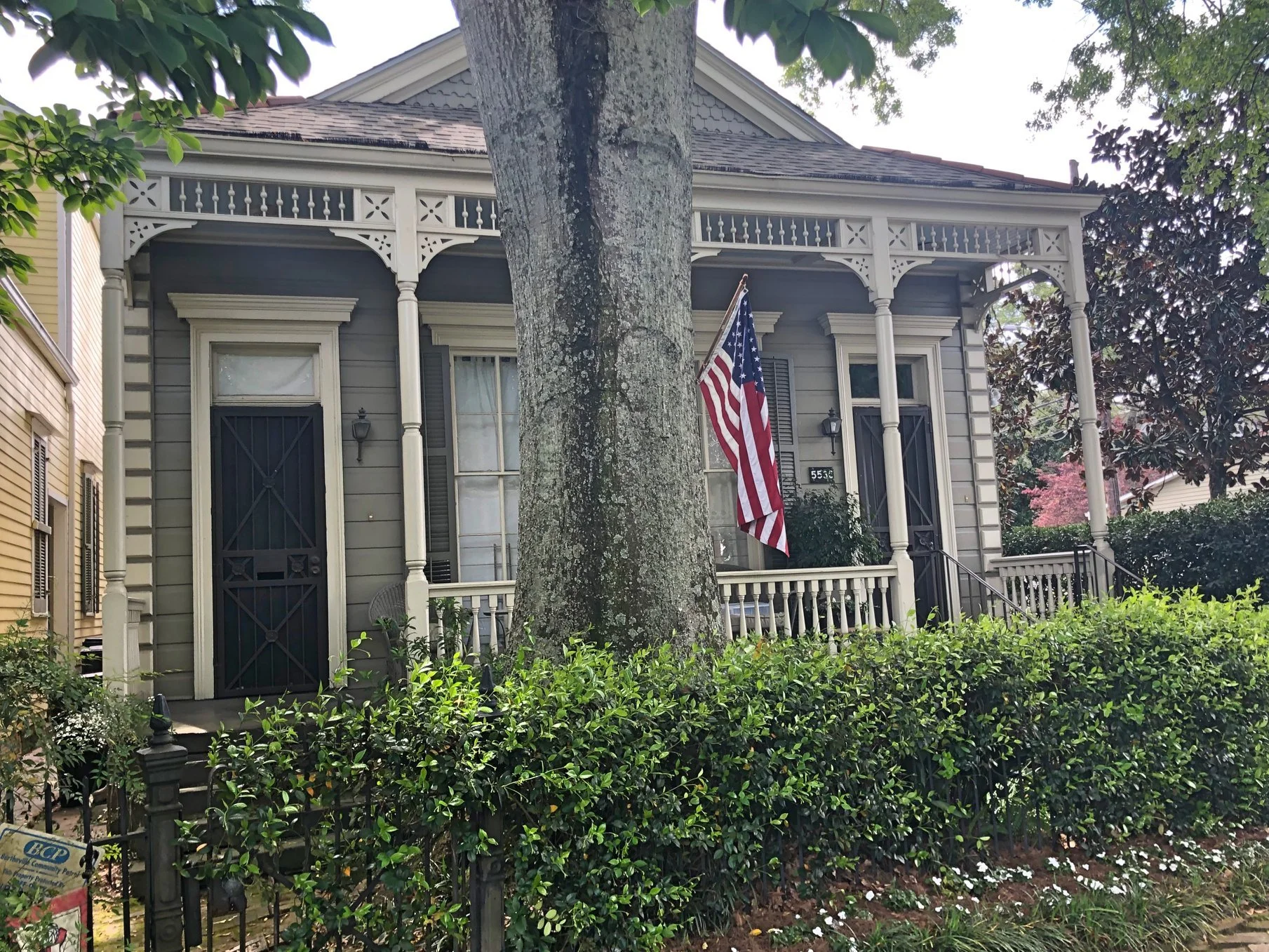
Laurel Street
Within a matter of months, I was completely smitten with my new city.
The air smelled of fried oysters, jasmine, or sweet olive, depending on the wind and the season. Random little walking parades came down the street during Mardi Gras. You could hear high school marching bands practicing after school, train cars smashing together along the riverfront, and ship horns on the river.
One Saturday morning, an old blue pickup truck came driving slowly down the street with its hood stuck all the way up and Wagner's "Ride of the Valkyries" blasting from the stereo. It was a vignette so absurd and yet so routine that it captured much of what I loved about the city.
It was a dreamy, improbable, beguiling place to live. I never stopped being amazed that I landed there.
Back at the Monkey Hill Bar, the TV news was showing storm tracks in what meteorologists call a “spaghetti model.” Half a dozen squiggly lines entered the Gulf of Mexico and then curled back east, indicating landfall somewhere along Florida’s Gulf Coast.
A new colleague, Tony, had just moved from Boston to join our faculty. As we drank and talked, Tony’s attention was focused on an outlier. The one hypothetical spaghetti strand that arced much further west into the Gulf before turning upward like a left hook, punching right through Orleans Parish.
“Should we be thinking about evacuating?” he said.
And we all laughed.
“Don't be silly!” we said. Barely even qualifying as a hurricane, it was definitely headed to Florida.
Nothing to worry about.
But we weren't laughing the next morning, when the Times Picayune landed on our doorsteps with news that the models had changed, and now the storm was much bigger. It was officially a Category 3 hurricane, and the tracks were pointing toward New Orleans, Gulfport, and Biloxi.
Too close for local bravado.
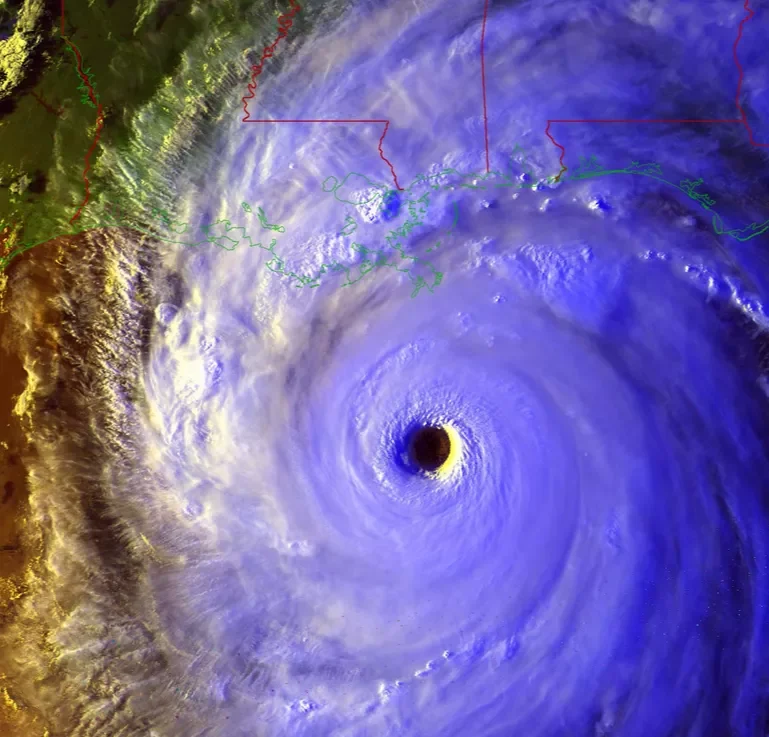
Hurricane Katrina Credit: NOAA/NCEI
Within twenty-four hours of teasing Tony about his new-guy naivety, we were all on the road.
Except for me, because I had a problem.
It was August in South Louisiana, I had two cats, and the air conditioning in my little gray Honda Civic was broken. I had a place to stay in Houston with friends, so I decided to wait until dark and drive through the night to avoid the worst of the heat.
The drive from New Orleans to Houston takes a little over five hours under normal circumstances, but even with the heavy evacuation traffic I figured I had enough wiggle room to make Houston by sunup.
I was incorrect.
By hour six, I had only made it to Baton Rouge.
The sun came up, and the cats started to pant and look at me in a kind of wide-eyed distress I'd never seen before.
Sweaty and anxious, I managed to finagle the car awkwardly through the bumper-to-bumper traffic on I-10 and onto a smaller state highway, where at least we could get some air flow going.
At one point, I was hit from behind in the stop-and-go traffic, and something in my car’s engine dislodged, making a loud rattling noise. After a “sorry baby,” and “no problem” exchange with the driver, I managed to fix the loose part with a paperclip from my work bag.
My work bag. That’s what I’d packed, along with maybe three changes of clothes. I was so sure we’d be back early the next week that I didn’t want to get behind on my grading and lesson planning.
But the traffic was too slow to offset the intolerable heat inside the car, so I pulled into a small town called Opelousas and found a broad live oak tree behind a bank building on Main Street. I set the cat carriers in the shade and called my Houston friends to tell them we were going to stay put until nightfall.
They jumped on the phone to the Louisiana SPCA and soon connected me to a wonderful Cajun farmer who lived nearby.
“Stay put,” she told me over the phone, “I’ll be right there.”
She arrived a few minutes later in her minivan along with her three kids. They loaded up the cats and supplies, asking nothing in return.
“Don't worry about a thing. Come get them when you're ready,” she said.
I thanked her, which didn't seem nearly enough, and made my way slowly to Houston, a trip that ultimately took twenty-two hours.
We watched the destruction of our city from the safety of a Houston living room.
Later, I learned that my house, which stood seven feet above sea level, was unscathed. But our school wasn’t, and along with eighty-four colleagues, I learned that I’d lost my job.
I spent the autumn months helping friends clear the rubble from their houses, stripping walls down to studs. I worked with Habitat for Humanity alongside volunteers from all over the country.
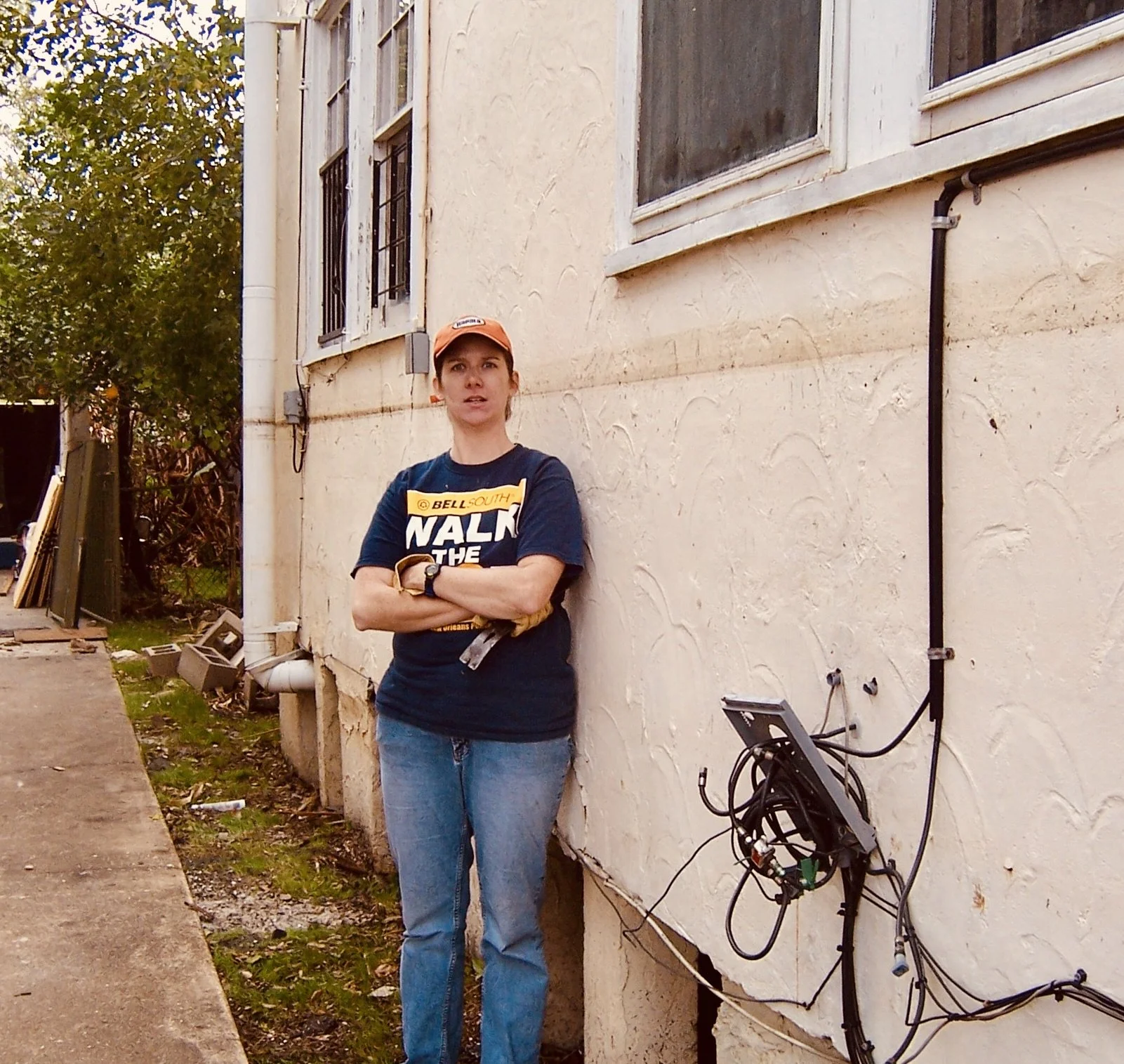
Waterline at friends’ house
With a sense of ambivalence, I flew to Nashville and Sarasota for job interviews. But my heart wasn’t on the same timeline as the school hiring season, and I couldn’t really imagine leaving New Orleans.
But I was in the early years of my career, and there were no teaching jobs in the city at that time. After turning down a few job offers, I eventually accepted a position in Pennsylvania. I watched in numb disbelief as the moving truck pulled away from Laurel Street.
I’ve lived happily in other places since then, but always with a faint hum of grief for the dreamy, beautiful life I lived in those years before disaster.